
The 2026 Parent's Guide to Choosing an Online English School in China
A note on transparency: This guide is written and published by Meridian English. We have done our best to represent each model fairly, including options we do not offer. We encourage you to research all providers independently and speak to current families before making a decision.
Introduction: Why Choosing an Online English School Feels Different in 2026
Over the past few years, the online English education market serving Chinese families has changed significantly.
Parents are no longer simply asking:
“Which platform is cheapest?”
Instead, families are asking more thoughtful questions:
- Is the company stable?
- Where are the teachers based?
- How much must I pay upfront?
- Will my child genuinely improve?
- Is this structured like a real school?
This guide compares several well-known providers — including 51Talk, VIPKid, DaDaABC, and a UK-based small-group provider — to help families make an informed, long-term decision.

1. 1-to-1 vs Small Group: Which Model Works Best?
One of the biggest differences between providers is class structure. Most major China-origin platforms were built on a 1-to-1 model, where one student meets one teacher online. Small-group models (2-6 students) whilst rare are more common among overseas academic schools.
Advantages of 1-to-1 Lessons
- Is the company stable?
- Where are the teachers based?
- How much must I pay upfront?
- Will my child genuinely improve?
- Is this structured like a real school?
Advantages of Small-Group Lessons
- Peer interaction
- Social communication skills
- Exposure to different accents and speaking styles
- More dynamic classroom discussion

2. Teacher Origin: Does It Matter?
Another common question parents ask is: Are British teachers better than North American teachers? Does it matter if teachers are based in the Philippines?
There is no universal “best.” However, teacher origin can influence accent exposure, cultural context, curriculum alignment, and regulatory standards.
What We See Across Providers
- 51Talk is widely known for using Philippines-based teachers.
- VIPKid historically focused on North American teachers.
- DaDaABC offered fixed native-speaking teachers.
- British Council Accredited UK-based schools are often compelled to use British-trained teachers aligned with the UK education system.
The key question is not nationality alone — but how teachers are trained, whether there is academic oversight, and whether curriculum is structured.
3. Stability: A Crucial Question After 2021
Many families experienced disruption during China’s regulatory reforms in 2021. Since then, parents have become more cautious about large prepaid packages, company restructuring, and sudden platform changes.
Several well-known brands have adapted their business models, including VIPKid, DaDaABC, and 51Talk.
Parents now often check:
- Is it overseas-based?
- Does it publish accreditation information?
- How much money must I pay upfront?
Stability has become just as important as teaching quality.

4. Pricing Models: Large Packages vs Term-Based Enrolment
Traditional China-market platforms often rely on large lesson bundles (100-300 lessons), significant upfront payment, and commission-driven sales teams. This model can reduce per-lesson cost but increases financial commitment.
Some overseas schools now offer:
- Semester-based enrolment
- Smaller commitment periods
- Transparent tuition structures
- Flexible exit options
5. Curriculum: Entertainment Platform or Academic Pathway?
Another key difference is curriculum philosophy.
Some platforms prioritise:
- Gamified avatars
- Cartoon-style environments
- Engagement-first design
Others emphasise:
- Reading progression
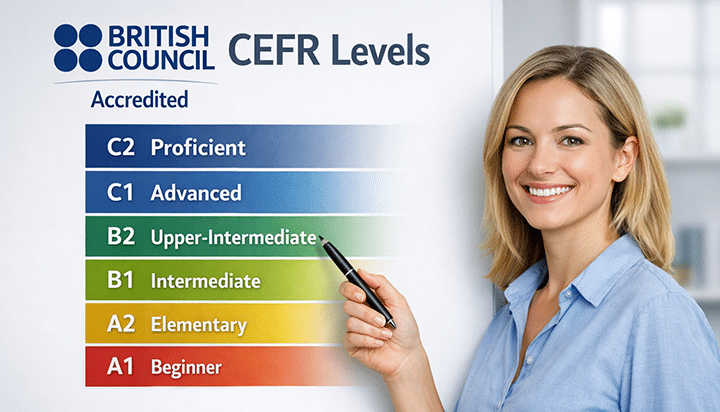
- CEFR alignment
- Cambridge exam preparation
- Structured skill development
Parents should ask: Is there a level system? How is progress measured? Are reports detailed? Does it align with international standards?
2026 Structured Comparison Table
A neutral comparison of four common models available to Chinese families.
| Comparison Factor | 51Talk (Online English Platform) | VIPKid (Online Tutoring Platform) | DaDaABC (Online English Platform) | Meridian English (Accredited Online English School) |
|---|---|---|---|---|
| Lesson Format | Primarily 1-to-1 online lessons | Historically 1-to-1 online lessons | Fixed 1-to-1 teacher lessons | Small group classes (2–6 students) |
| Teacher Origin | Often Philippines-based teachers | Historically North American teachers | Mixed native-speaking teachers | UK-based British teachers |
| Accent Exposure | Filipino English | North American English | Mixed English accents | British English |
| Class Interaction | One student + teacher | One student + teacher | One student + teacher | Peer discussion with guided speaking |
| Curriculum Structure | Proprietary structured content | Branded structured curriculum | Level-based pathway | British curriculum-aligned progression |
| Progress Measurement | Internal reporting | Level progression system | Level tracking | CEFR-aligned progress reports |
| Payment Model | Package-based payment | Package-based payment | Package-based payment | Semester-based enrolment |
| Typical Commitment | Medium to large lesson bundles | Medium to large lesson bundles | Larger prepaid lesson bundles | Smaller term commitment |
| Social Language Development | Limited peer interaction | Limited peer interaction | Limited peer interaction | Built-in peer collaboration |
| Company Structure | Overseas listed entity | International restructuring history | Reorganised platform model | UK-based overseas education provider |
| Academic Accreditation | Not specified | Not specified | Not specified | British Council accredited |

6. Which Model Is Right for Your Family?
Different families prioritise different outcomes.
51Talk may suit families who:
- Prefer 1-to-1 structure
- Prioritise cost efficiency
- Want flexible teacher scheduling
VIPKid may suit families who:
- Prefer North American accent exposure
- Value brand recognition
DaDaABC may suit families who:
- Prefer fixed-teacher continuity
- Want structured level progression
Meridian English may suit families who:
- Prefer small-group learning
- Prefer fixed-teacher continuity
- Want UK-based teachers
- Seek British curriculum alignment
- Prefer lower upfront financial risk
- Value academic structure over platform entertainment
- Value Accreditation
There is no single “best” model — only the best fit for your goals.

7. Questions Every Parent Should Ask Before Enrolling
Before committing, consider asking:
- Where is the company legally registered?
- How much do I pay upfront?
- Can I stop and get my money back on unused lessons?
- How are teachers trained and supervised?
- Is there a Director of Studies?
- How is progress measured?
- Is the curriculum aligned with CEFR or Cambridge standards?
- Is it important that my child interacts with peers or am I happy for 1-to-1?
These questions often reveal more than price comparisons.
The 2026 Shift: From Cheap to Stable
The market has matured. Parents are no longer only comparing price per lesson. They are comparing:
- Risk
- Stability
- Academic depth
- Long-term outcomes
The best online English school for your child in 2026 is not necessarily the largest platform. It is the one that:
- Matches your educational philosophy
- Offers financial transparency
- Provides consistent academic oversight
- Supports your child's confidence and long-term development
Online English education is no longer experimental. It is part of a child’s long-term academic pathway and life-opportunity. Choosing carefully — and asking the right questions — matters more than ever.
9. Frequently Asked Questions (2026)
Is 1-to-1 better than small group for online English lessons?
Not necessarily. 1-to-1 lessons offer maximum speaking time and personalised pacing. Small-group lessons (2-6 students) encourage peer interaction, listening skills, and real conversational dynamics. For some young learners, small groups often build confidence in speaking publicly rather than only speaking privately with a teacher.
Are British teachers better than North American teachers?
Neither is universally “better.” The difference is usually accent and curriculum alignment. British teachers typically follow UK spelling and pronunciation, while North American teachers use American standards. The more important factors are teacher training, experience with children, and academic supervision.
Why do some online English schools require large prepaid packages?
Many traditional China-focused platforms use bundle pricing to reduce per-lesson cost and secure long-term enrolment. However, this requires higher upfront financial commitment. Some overseas providers now offer semester-based enrolment with smaller commitment sizes to reduce financial risk for families.
What happened to VIPKid and other large platforms after 2021?
Several large online education companies, including VIPKid and DaDaABC, adjusted their business models following regulatory reforms. Many shifted operational structures or focused more on overseas markets. Parents today often prioritise company stability when choosing a provider.
Is 51Talk still operating internationally?
51Talk continues to operate and has expanded into international markets. It is widely known for its 1-to-1 model, often using Philippines-based teachers. As with any provider, parents should review current pricing structures and enrolment terms before committing.
How can I check if an online English school is financially stable?
Parents can review:
1. Where the company is legally registered
2. How long it has been operating
3. Whether it requires large upfront payments
4. Whether enrolment can be paused or stopped
Shorter financial commitments often reduce risk.
What is CEFR and why does it matter?
CEFR (Common European Framework of Reference) is an internationally recognised system for measuring English proficiency from A1 to C2 level. Schools aligned with CEFR provide structured progression benchmarks, making it easier to track improvement and prepare for international exams.
How do I know if my child is really improving in online English classes?
Look for:
1. Structured level systems
2. Regular progress reports
3. Reading development tracking
4. Clear learning objectives
5. Speaking assessments
Improvement should be measurable over time — not just visible through enjoyment.
Is small-group learning too distracting for young children?
In well-structured classes, small groups are moderated carefully. Professional teachers ensure each child participates while maintaining focus. For many children, peer interaction increases motivation and reduces anxiety compared to one-to-one intensity.
What should I prioritise in 2026 when choosing an online English school?
In today’s market, most parents prioritise:
1. Stability
2. Transparent pricing
3. Academic structure
4. Teacher quality
5. Manageable financial commitment
Price alone is no longer the primary deciding factor.
Online English education is no longer experimental — it is part of a child’s long-term academic pathway. Choosing carefully, and asking the right questions, matters more than ever.